Water Damage Cleanup in Wilmington, DE
After water intrusion occurs, thorough cleanup is an essential phase in stabilizing your property. Water damage cleanup may involve removing water-damaged materials, cleaning affected surfaces, addressing remaining moisture, and determining what requires further structural drying or repair.
Explore what cleanup typically entails, understand when material removal is appropriate, and request assistance for your property in Wilmington and surrounding New Castle County communities.
What Water Damage Cleanup Involves
Once initial water has stopped flowing, the cleanup stage addresses the physical aftermath of the intrusion. While every home and commercial space presents distinct challenges, practical water damage cleanup commonly involves:
Identifying Affected Materials
Evaluating visible damage to determine which structural assemblies, floor coverings, and trim have absorbed moisture.
Extracting Residual Standing Water
Using suitable extraction equipment to remove surface puddles or pooled liquid before physical cleanup begins.
Separating Salvageable Items
Distinguishing between items that can be successfully dried and sanitized versus non-salvageable materials needing disposal.
Selective Material Removal
Carefully taking out damaged, saturated building materials such as ruined carpet padding, soaked drywall, or saturated insulation.
Surface Cleaning & Debris Handling
Clearing construction dust, removing soiled debris, and cleaning exposed framing and subfloor surfaces.
Sanitization & Disinfection Considerations
Evaluating whether antimicrobial application or specialized sanitizing is appropriate based on the water cleanliness category.
Residual Moisture Assessment
Checking moisture levels in framing and cavities to determine whether continued mechanical structural drying is required.
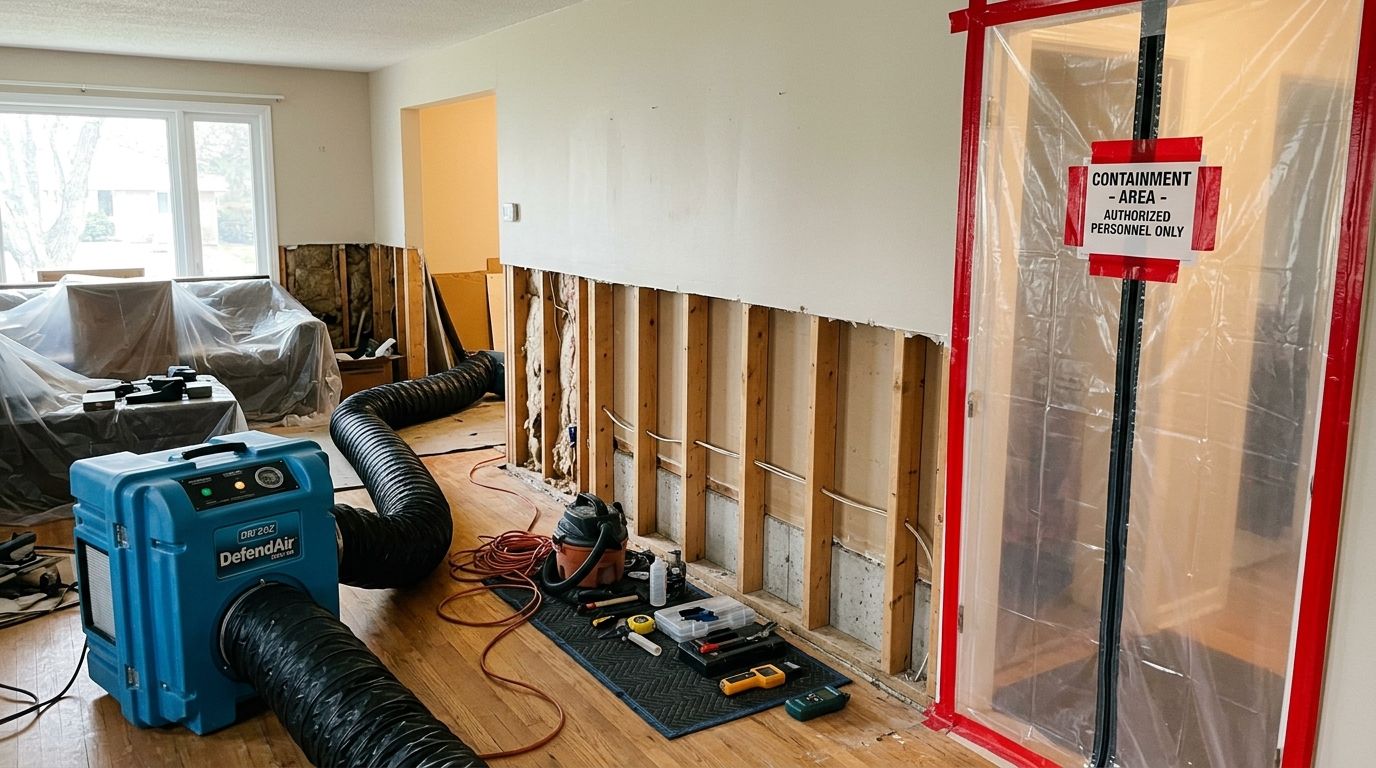
Selective Material Removal & Wall Cavity Inspection
Need Help Assessing Cleanup Needs?
If your property has experienced water intrusion, call our restoration team to discuss drying options and immediate next steps.
Call (302) 586-8041When Damaged Materials May Need Removal
Porous building materials absorb water readily. Depending on how long materials were submerged and the cleanliness of the water source, some elements may dry safely, while others require selective removal to protect framing and indoor air quality:
Drywall & Baseboards
Drywall wicks moisture upward behind baseboards. A selective flood cut—cutting away the lower section of drywall above the moisture line—allows wall cavities to air out and prevents trapping water inside walls. The decision and cut height depend on on-site moisture readings and the water source.
Insulation
Wet fiberglass or cellulose insulation inside wall cavities compresses, permanently loses its insulating properties, and holds dampness against wooden wall studs. Saturated insulation is typically removed to facilitate proper drying.
Carpet & Padding
While some carpets can be cleaned and dried in place if the water is clean, dense carpet padding underneath acts like a sponge, holding moisture against the subfloor. Padding often requires replacement to prevent subfloor damage.
Hardwood & Laminate Flooring
Laminate flooring tends to swell permanently along edges when exposed to moisture. Solid hardwood may cup or buckle; professional evaluation helps determine whether hardwood can be dried in place using specialized floor drying systems or requires replacement.
Cleaning and Contamination Considerations
The cleaning procedures required depend fundamentally on the origin and purity of the water. Standard clean-water leaks require different precautions than incidents involving contaminated water:
Clean Water Intrusion
Originating from broken supply pipes, appliance supply lines, or sink overflows. Primary cleanup focuses on water extraction, surface cleaning, and structural drying before standing water degrades over time.
Grey Water Contamination
Water from washing machine drains, dishwasher discharges, or sump overflows that may contain detergents or organic matter. Affected surfaces require thorough cleaning and appropriate sanitization treatments.
Black Water & Sewage
Water from municipal sewer backups, outdoor river flooding, or contaminated runoff. Requires specialized protective equipment, containment, disposal of porous materials, and thorough professional decontamination.
Contamination Safety Notice
Never enter areas with standing water where electrical hazards may exist, or where sewage or contaminated surface runoff is present. Avoid direct skin contact with contaminated water, keep occupants and pets away from affected rooms, and follow instructions from emergency or utility personnel.
What Happens After Water Damage Cleanup?
Physical cleanup is a critical transitional phase in the recovery journey, clearing away ruined materials and preparing the property for complete restoration:
Moisture Verification
After debris and wet coverings are removed, moisture detection tools assess whether underlying wall studs, subfloors, and framing still hold hidden dampness.
Structural Drying
When moisture readings remain elevated, commercial air movers and dehumidifiers are operated to extract deep moisture from structural members until dry standards are achieved.
Rebuilding & Repairs
Once materials are verified dry, reconstruction can proceed—including installing new drywall, replacing insulation, re-trimming baseboards, and laying fresh floor coverings.
The Water Damage Cleanup Process
While exact procedures depend on the property and water source, professional water cleanup generally follows a four-step framework:
Review & Safety Check
Reviewing the reported water source, inspecting affected rooms, and verifying electrical and physical safety before work begins.
Water & Material Removal
Removing residual standing water and selectively taking out non-salvageable, water-soaked materials such as ruined drywall or soaked padding.
Surface Cleaning & Treatment
Cleaning exposed framing and subfloors, managing debris, and considering sanitization or antimicrobial wash when contamination exists.
Moisture Evaluation & Next Steps
Assessing moisture levels in exposed framing to determine whether extended mechanical structural drying or direct rebuilding is appropriate.
Example: Material Removal and Cavity Ventilation
The following scenario illustrates practical material removal and wall cavity access following indoor water intrusion. This example is intended to help property owners understand the cleanup stage and is not a photograph of a completed First State project, a customer testimonial, or a guarantee of a specific result.
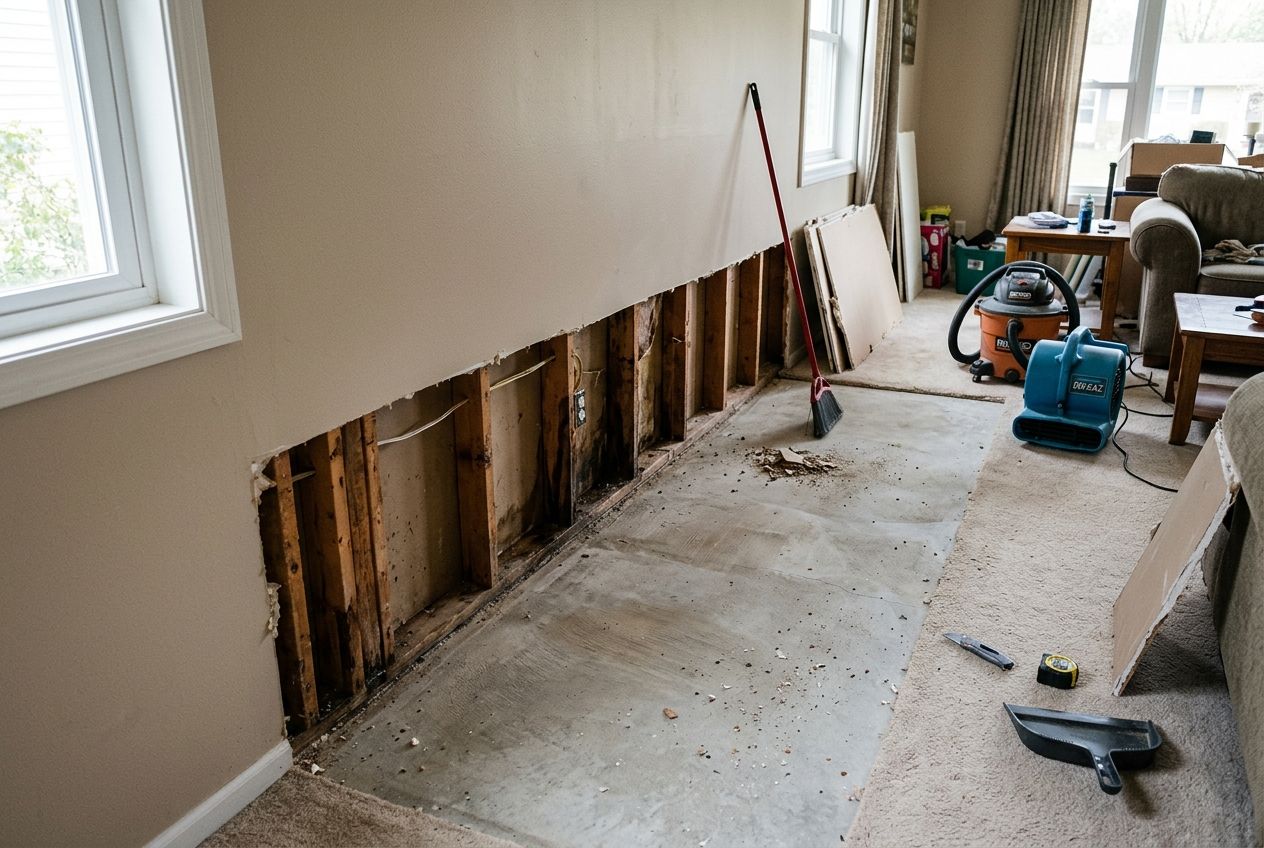
Example of Material Removal and Cavity Ventilation in a Residential Space
In this residential room, the lower portion of water-damaged drywall has been cleanly removed along the base of the wall (a selective flood cut), exposing the wooden wall studs and allowing air circulation directly into the wall cavity. Compromised carpet in the wet zone has been taken up to reveal the concrete slab floor, and construction debris has been swept away so drying equipment can operate efficiently.
Explore Related Water Damage Services
Different water damage situations require tailored solutions. Learn more about our focused restoration categories:
Emergency Water Damage Restoration
Learn about urgent response procedures, source containment, and emergency water extraction for active water losses.
Basement Water Damage
Information on addressing water intrusion, foundation seepage, and moisture problems specific to residential basements.
Water Damage Cleanup FAQs
Answers to common questions regarding water damage cleanup procedures, material removal, contamination risks, and structural drying.
What does water damage cleanup involve?
Water damage cleanup involves removing non-salvageable wet materials (such as saturated carpet padding or ruined drywall), clearing standing water, cleaning affected surfaces, and addressing residual moisture. Depending on the water category and level of contamination, sanitization or antimicrobial treatments may also be applied to help stabilize the environment before structural drying or rebuilding begins.
When might wet drywall or flooring need to be removed?
Building materials typically require removal when they have sustained structural damage, have been submerged for prolonged periods, or were affected by contaminated water. Porous materials like drywall and carpet padding easily absorb moisture and trap dampness inside wall cavities and subfloors. A qualified professional evaluates moisture readings and the water source to determine whether materials can be dried in place or should be selectively removed.
Is cleanup different when water comes from a sewage backup?
Yes. Water from sewer lines or outdoor floodwaters (Category 3 water) contains bacteria, pathogens, and biological contaminants. Cleanup for contaminated water requires specialized safety precautions, personal protective equipment, controlled disposal of affected porous items, and thorough sanitization of all salvageable surfaces to help restore sanitary conditions.
Does water damage cleanup include structural drying?
Cleanup and structural drying are closely linked but distinct phases of recovery. Cleanup focuses on physical tasks—removing water, clearing debris, taking out ruined materials, and sanitizing surfaces. Structural drying follows cleanup by using commercial air movers and dehumidifiers to pull trapped moisture out of framing, concrete, and subfloors until normal moisture levels are reached.
How long can water damage cleanup take?
The duration of cleanup depends on the volume of water, the square footage affected, the types of materials involved, and whether contamination is present. Simple cleanup of clean water in a small area may take several hours to a full day, whereas extensive material removal and debris handling across multiple rooms can take longer. Structural drying that follows cleanup typically takes additional days depending on environmental conditions.
What should I do before cleanup begins?
Prioritize safety above all else. If you can safely reach your shut-off valve without stepping into standing water, turn off the water supply to stop incoming leaks. Stay away from wet areas if electrical hazards exist. Take clear photos and videos of the damage and affected belongings for insurance documentation, and contact your insurance carrier and a qualified restoration professional to discuss next steps.
Need Water Damage Cleanup in Wilmington?
If your property has experienced water intrusion, timely cleanup helps prevent progressive structural damage and mold growth. Contact our team to discuss appropriate cleanup and drying steps for your home or business.
Serving Wilmington, Newark, Bear, and surrounding New Castle County communities.